Book soon Openers · Richmond Hill
Emergency Release Repair in Richmond Hill
Your garage is detached and has no side door. The remote is dead, the keypad is dead, and the small round lock in the top panel is meant to be your way in.
Call now · open 24/7(289) 210-5126Right now
Before the door is looked at
Call (289) 210-5126, open 24/7.
Pull the release with the door fully closed whenever possible, and keep the opening clear as you do. Once the trolley lets go, the door is held by its springs alone, and a closed door can still shift unexpectedly.
Lift a door by its handles or the gripping points on the panel face, never at the joint between sections, which closes as the door bends around the track.
Never drive a vehicle at a closed door to get out; the door collapses and the stored tension in the counterbalance is released. Use the release, the outside key release, or a technician.
In plain words
What gets repaired depends on which link failed. A cord that rotted or snapped is simplest: a new rope and red handle, cut so the handle hangs no higher than about 1.8 metres and clears the car roof. A lever that will not stay latched needs its spring or the lever itself replaced. A trolley with worn latch teeth, or one driven hard into the stop bolt, is freed, adjusted or swapped for the assembly made for that opener. On the outside key release, a seized cylinder, a stretched cable or a lost key each has its own fix. The technician names the part before work begins.
How the visit goesA previous owner knotted the release cord around the rail and stacked storage shelves right beneath it. You only discovered this in the dark, with the power off, a flashlight in your teeth and a car that needed to be somewhere.
Emergency Release Repair · Richmond Hill
How the visit goes
- 1
Where the handle hangs
Height and position are measured, not guessed. The handle should hang no more than about 1.8 metres above the floor so a person standing on the slab can reach it, and it should clear the roof and antenna of the vehicle parked beneath. The technician also looks at what surrounds it: shelving, bikes on hooks, a storage loft, a cord tied up around the rail by a previous owner. A handle nobody can find in the dark is as good as no handle at all, so obstructions and a cord that was shortened after a door change are recorded as part of the fault, not as clutter.
- 2
Freeing a trolley from the stop bolt
A trolley jammed against the stop at the end of the rail is freed rather than forced. The release is pulled so the door is out of the picture, the chain or belt tension nut is backed off a few turns to give the trolley room, and the motor is run so the trolley walks away from the stop. The travel limit that let it run too far is then adjusted, the chain or belt is re-tensioned to the sag the maker specifies for that rail, and the trolley is reconnected. Because the limits were touched, the door is cycled and the reversal tests are repeated before the job is called done.
- 3
A monthly minute of checking
The industry advice is to look over the door and opener about once a month, and the release fits into that habit. With the door closed, pull the handle and raise the door by hand to about halfway to feel that it moves freely and holds where you leave it; then lower it and reconnect. Follow with the reversal checks: the door should back off a length of 2x4 laid flat on the floor and reverse when something passes through the sensor beam. If the door ever feels heavier than it did today, or the trolley stops clicking home, that is the moment to call rather than to keep using it.
In the van
- Chain or belt tension hardware
- Door arm, clevis pins and clips
- Dry lock lubricant and de-icer
- Outside key release kit (lock, cable, keys)
- Hole saw for the top section
What affects the quote
- 1
Cord, lever or trolley
A rope and handle is the smallest item; a lever and spring sits in the middle; a complete trolley or carriage assembly is the larger part, and the diagnosis says which one you need.
- 2
Age and parts availability
Trolleys, levers and rope kits for openers from the last two decades are stocked. An older model may need a part sourced, and the quote says whether that is a wait or a reason to consider replacement.
- 3
Number of doors and openers
A double garage with two openers, or a house with a detached garage as well, means two releases to check and possibly two sets of parts, and the quote counts each.
Same fees day, night or weekend.
Emergency Release Repair: questions
Why does the trolley run but never reconnect to the door?
Three usual causes. On many rails, pulling the cord back toward the opener deliberately holds the lever out for a spell of manual use, and someone forgot to return it. Or the trolley latch teeth or the release arm are worn or bent, so the two parts pass without catching. Or the carriage sits at the wrong point for the powered trolley to meet, since reconnecting is meant to happen during an opener cycle, not by pushing the door shut by hand. Each is a short fix once identified.
How do I keep the door in manual mode during a long outage?
On many rails, pull the cord straight down and then back toward the opener; the lever stays in the released position until you return it, so the trolley will not catch the door on its own. On others the trolley simply stays free until the opener is run. Lift and lower the door by its handle and use the slide bolt or manual lock to hold it shut. When power returns, reconnect first, then use the wall control.
What happens if someone pulled the release while the door was open?
Sometimes nothing, if the door is well balanced and stayed where it was. If the door came down on its own, the technician checks what took the impact: the door arm, the carriage, the bottom brackets, the rollers and the panel around the arm bracket. A bent arm or carriage is replaced, and the balance test shows whether the springs contributed. Then the release is reconnected with the door closed and the household is shown the right sequence.
Openers & Access
Bigger photo, sooner job: Emergency Book soon Plan ahead
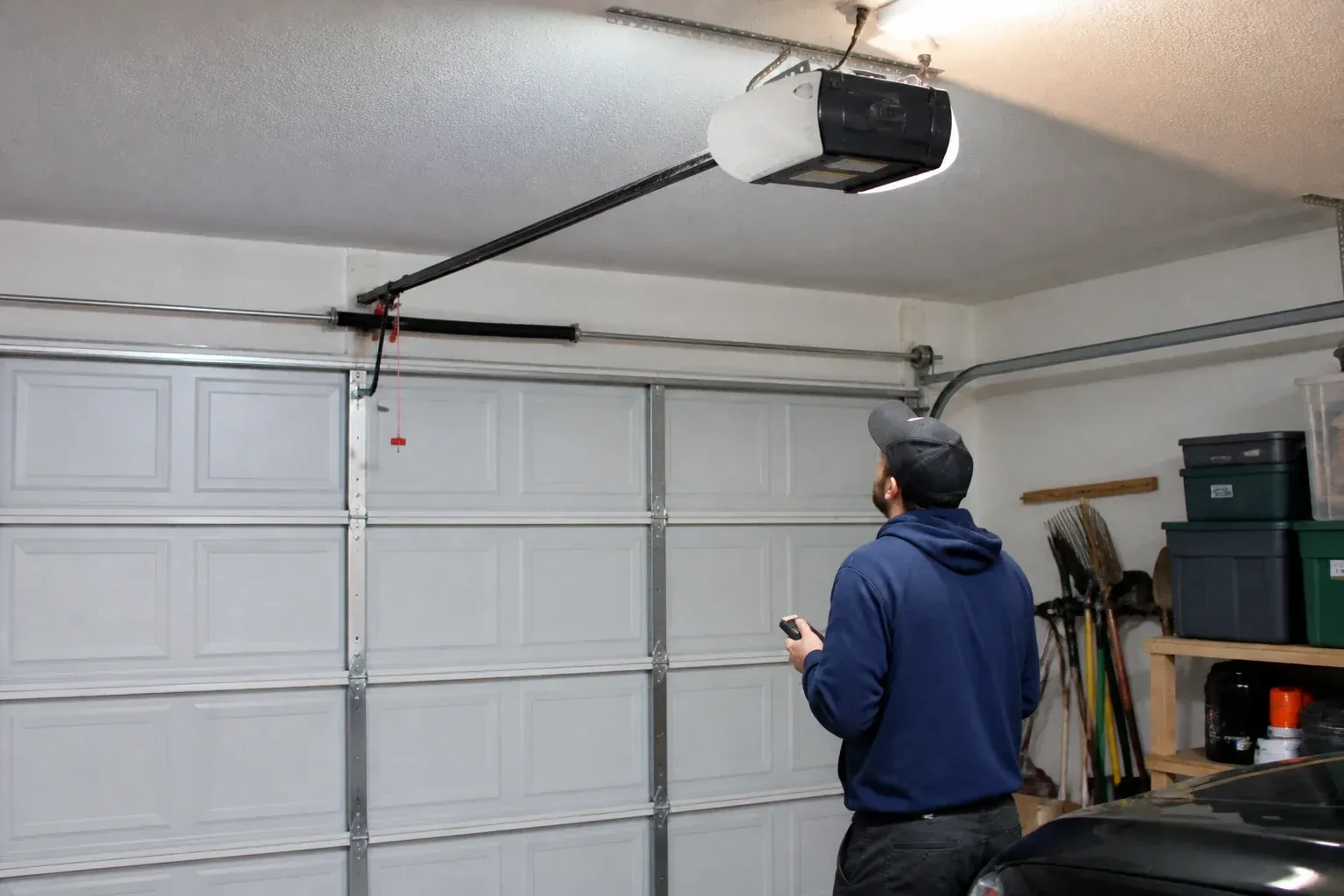 Book soonGarage Door Opener Diagnosis and RepairIt is a January morning and the door lifts about a hand's width, groans, and settles back down.
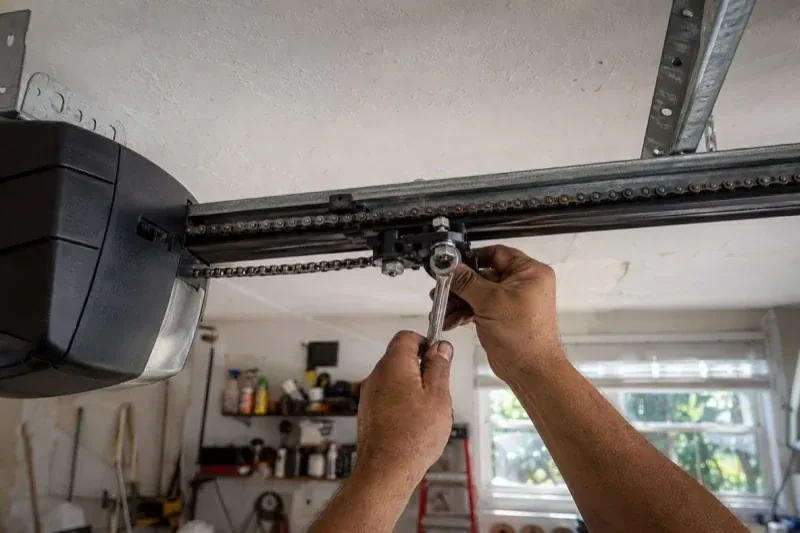 Book soonChain-Drive Opener RepairPress the button and the opener hums for a second, then quits.
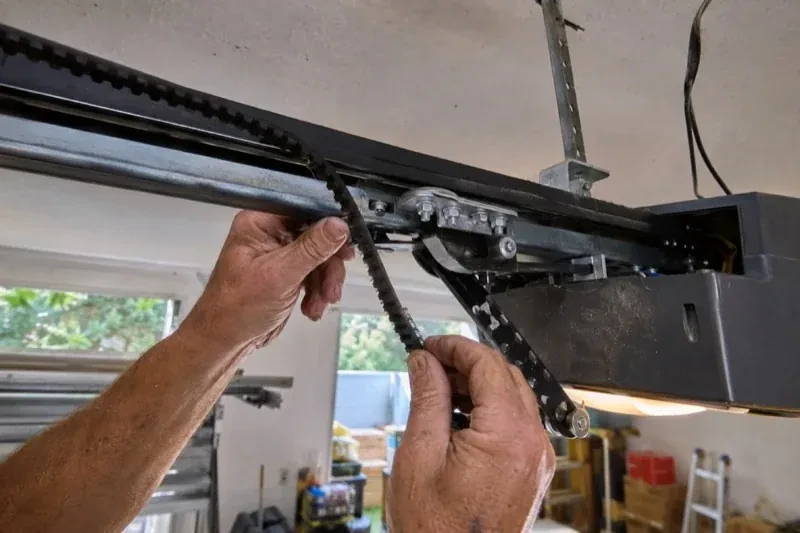 Book soonBelt-Drive Opener RepairIt is minus twenty in the detached garage and the door climbs in jerks, the belt stiff as a board.
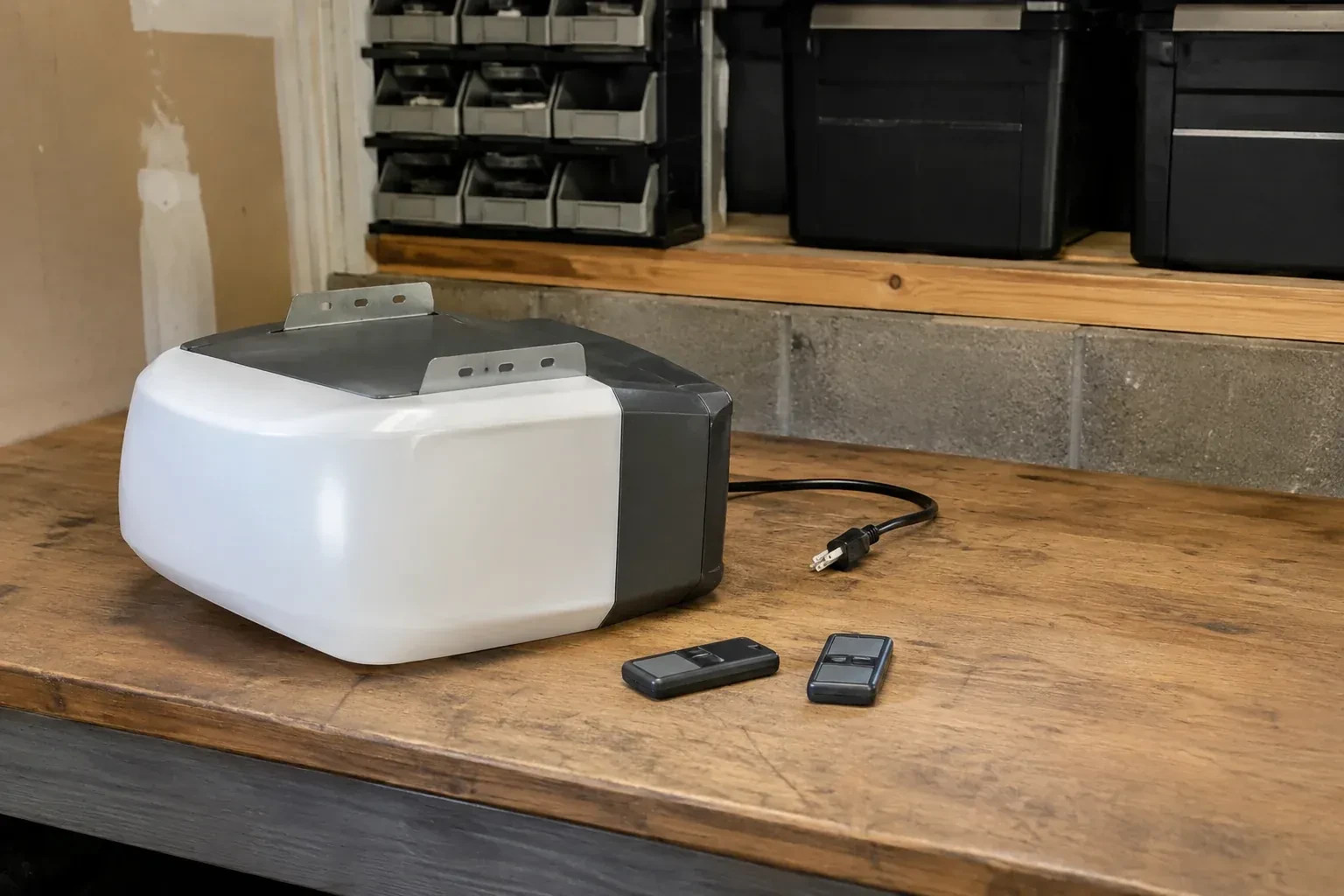 Plan aheadGarage Door Opener Replacement
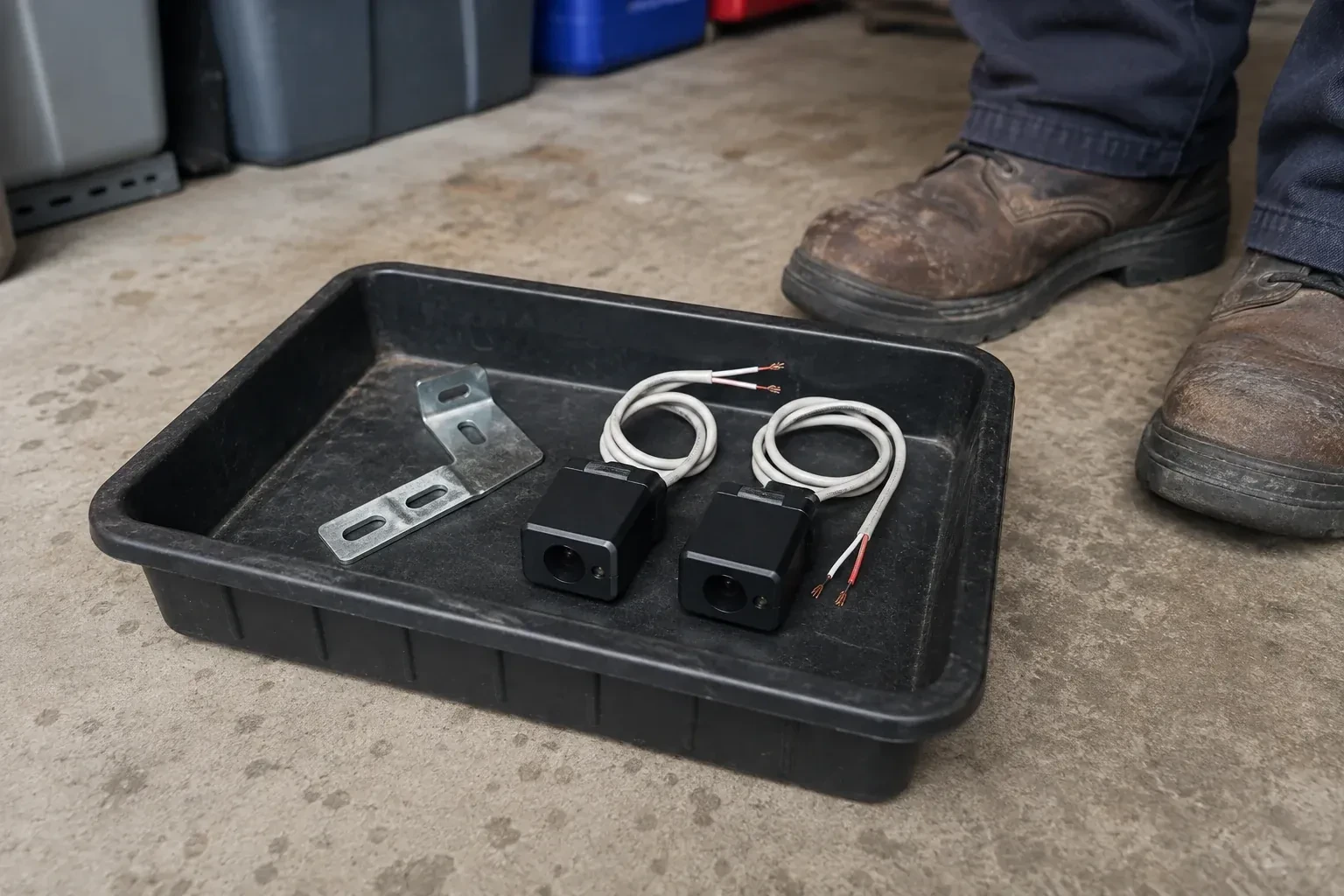 Book soonPhoto-Eye Sensor Alignment or ReplacementThe small light on one of the sensors near the floor has gone dark, or it flickers when someone walks past the track.
Emergency Release Repair near you
York, Ontario
Richmond Hill information
- Town
- Richmond Hill, York, Ontario
- In business
- 22 years
- Hours
- Open 24/7 · nights, weekends and holidays, same fees
- Phone
- (289) 210-5126
- Visits
- On-site assessment preferred. Request a visit or call.
What the census means at the door
15%
Newer homes. About 15% of homes in Richmond Hill were built in 1980 or earlier, according to the 2021 Census.
Newer garages tend to have generous headroom and a finished ceiling, so options such as a jackshaft opener mounted beside the door, or a high-lift conversion for a car hoist, are practical. The technician checks the space and explains what would fit.
57%
A mix of homes. Single-detached houses make up about 57% of homes in Richmond Hill (2021 Census).
Where housing is varied, security needs vary too. A detached home wants its garage door closing fully and its interior door respected; a townhouse or condo wants old fobs and remotes cleared and the shared entrance working. We address whichever applies at each door.
Nearby
Open 24/7
Request a visit
Your garage is detached and has no side door.
Call now · open 24/7(289) 210-5126- On-site assessment preferred
- Same fees day, night or weekend
- 22 years in business